
How Much Does Lighting Installation Cost in Reading?
Lighting is one of the most impactful changes you can make to a home — and one of the most varied in terms of what it actually costs. A straightforward swap of pendant fittings on an existing circuit costs a fraction of a whole-house lighting redesign with new circuits, recessed downlights throughout, dimmer systems and external lighting. Understanding which type of project you are planning, and what drives the cost within that type, is the starting point for getting meaningful quotes rather than a range so wide it tells you nothing useful.
Reading’s housing stock creates a specific set of lighting installation contexts. The Victorian and Edwardian terraces of Caversham, Redlands and the older streets around the university have lath-and-plaster ceilings that make recessed downlight installation more involved than on properties with plasterboard. The inter-war and post-war semis of Tilehurst, Earley and Woodley have ceiling voids and floor structures that affect how cables are routed. The newer developments at Kennet Island, Green Park Village and the riverside regeneration areas have more accessible ceiling voids and modern consumer units with capacity for additional circuits. Each property type presents different installation conditions and different costs.
This post sets out realistic current prices for the main lighting installation types in the Reading market, explains what drives the final figure, and covers what the installation process actually involves.
What Does Lighting Installation Cost in Reading?
For a registered electrician working across Reading and the surrounding Berkshire area, realistic current prices are:
Recessed downlight installation:
- Per downlight, new circuit included: £80–£140
- Per downlight, existing circuit: £55–£95
- Full room conversion (8–12 downlights, new circuit): £650–£1,200
- Whole-house downlight installation (3-bed property): £2,200–£4,500+
Feature and pendant lighting:
- New pendant fitting on existing circuit: £60–£120
- New ceiling rose and pendant, new spur from existing circuit: £90–£180
- Feature lighting — wall lights, picture lights, bedside pendants: £75–£150 per fitting
LED strip lighting:
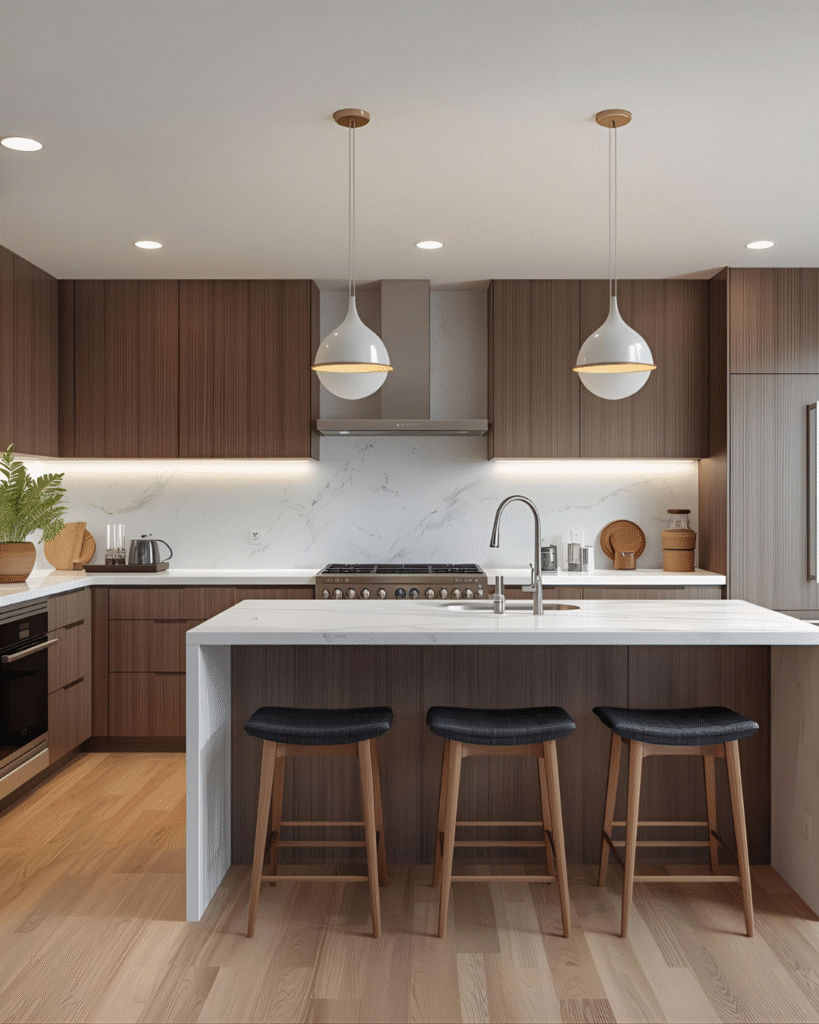
- Under-cabinet kitchen LED strip, complete installation: £180–£380
- Full room LED strip installation with controller: £250–£550
- Staircase or landing LED strip: £200–£450
Dimmer circuits:
- Replacing standard switch with dimmer (existing compatible circuit): £65–£110
- New dimmer circuit from consumer unit: £180–£320
External lighting:
- Security light installation, single fitting: £90–£160
- External lighting scheme (front and rear, multiple fittings): £350–£850
- Garden post or spike lighting, wired installation: £200–£600
Smart lighting systems:
- Smart dimmer switch retrofit (per switch): £120–£220
- Full room smart lighting installation with hub: £400–£900
- Whole-house smart lighting system: £1,500–£5,000+
These are installed prices including all labour, cable, fittings where supplied by the electrician, testing, and certification under Part P of the Building Regulations. Reading sits at the upper end of the Berkshire market for electrical labour given its position as a significant employment centre on the M4 corridor.
What Affects the Cost?
Ceiling Construction
The most significant variable in recessed downlight installation across Reading’s housing stock is ceiling construction. On properties with accessible plasterboard ceilings — common across the post-war semis of Earley, Woodley and Tilehurst, and throughout the newer developments around Green Park and the riverside — a downlight installation is relatively straightforward. Holes are cut, back boxes installed, cables routed through the ceiling void and the fittings dropped in.
On Victorian and Edwardian properties in Caversham, Redlands, the streets around Reading station and parts of central Reading, ceilings are frequently lath and plaster — a traditional construction of narrow timber strips covered with several coats of plaster that has been in place for over a century. Cutting into lath and plaster is slower, creates more dust and requires more careful reinstatement than cutting into plasterboard. The ceiling void above lath and plaster is also typically less accessible, which affects cable routing. On these properties, a downlight installation costs more per fitting and takes longer than on equivalent post-war or newer properties.
Access to Ceiling Voids
Even on properties with plasterboard ceilings, the accessibility of the ceiling void affects installation cost. Where there is a floor above that can be lifted — suspended timber first floors on most Reading properties — cable can be routed from above with minimal disturbance to the ceiling below. Where the ceiling void is inaccessible without cutting access hatches, or where the ceiling is immediately below a solid concrete floor (more common in converted flats and some 1960s and 1970s properties), cable routing requires more time and occasionally more surface disturbance.
Converted Victorian and Edwardian properties — Reading has a significant stock of these across Caversham and the central streets — often have floor and ceiling constructions that make cable routing more involved than the building’s age might suggest at first glance. An assessment of the ceiling void access before a quote is given is more reliable than a price estimated from the number of fittings alone.
Number of Circuits Required
A single room conversion is often achievable from an existing circuit where capacity allows. A whole-house lighting redesign almost always requires new dedicated circuits run from the consumer unit — one per zone or floor, depending on the installation design. Each new circuit adds the cost of the cable run from the consumer unit, a new MCB or RCBO in the board, and the testing and certification time for an additional circuit.
Where the existing consumer unit does not have spare capacity — common on the older fuse boards still found in some of Reading’s Victorian and Edwardian properties — a consumer unit upgrade is needed before additional lighting circuits can be added. If the existing board is a rewireable fuse board or an early MCB unit without RCD protection, upgrading it before the lighting installation is the right approach — it adds upfront cost but is significantly cheaper than two separate jobs at different times.
Dimming Compatibility
Not all existing lighting circuits are compatible with LED dimmer switches without modification. Standard trailing edge and leading edge dimmers designed for incandescent bulbs behave differently with LED loads, and using the wrong dimmer with LED fittings causes flickering, buzzing and reduced bulb life. A competent electrician will confirm dimmer and LED fitting compatibility at the specification stage rather than installing a system that behaves poorly once it is in use. Where existing wiring is being retained but dimmers are being added, a compatibility check before specifying fittings saves the cost of replacing incompatible components after installation.
Specification of Fittings
Where the electrician is supplying fittings rather than the homeowner, the specification of the fitting itself affects the total cost. Fire-rated downlights — required where there is a floor above and the ceiling forms part of a fire separation — cost more than standard downlights but are the correct fitting in most domestic situations. IP-rated fittings for bathrooms and wet areas add further cost. At the premium end, architectural downlights from manufacturers such as Astro, Orluna or John Cullen cost several times more than standard trade fittings, and the total installed price per fitting reflects this.
What Does the Installation Process Involve?
A lighting installation typically runs in two stages. First fix routes the cables through the ceiling void, positions back boxes and confirms cable positions relative to the confirmed fitting layout. Second fix connects the fittings, installs switches and dimmers, and tests and certifies the completed installation.
On a single room downlight conversion, first and second fix typically run consecutively in a single visit — the ceiling void is accessible and the cable runs are short. On a whole-house installation, first fix may run across two or three days, followed by plastering and decorating where ceiling penetrations have disturbed finishes, and second fix once the surfaces are ready.
Every new circuit or modified circuit must be tested to the requirements of BS 7671 (18th Edition Wiring Regulations) and certified under Part P of the Building Regulations. The electrician must be registered with a competent person scheme — NICEIC, NAPIT or equivalent — and issue a Minor Works or Electrical Installation Certificate on completion. Keep this certificate with your property paperwork.
How Long Does a Lighting Installation Take in Reading?
As a rough guide:
- Single room downlight conversion: half a day to one day
- Multi-room downlight installation: one to three days
- Whole-house lighting redesign with new circuits: three to five days
- Smart lighting system, whole house: three to seven days depending on system complexity
If you are planning a lighting installation in Reading, Caversham, Earley, Woodley, Tilehurst or anywhere across the Reading area, get in touch and we will come out to assess the property and give you a clear, honest price. Get in touch to arrange a visit.